Bluetooth Low Energy (BLE) has become a critical component in modern automotive systems, enabling energy-efficient connectivity while introducing new attack surfaces. Below we examine BLE’s automotive applications, associated vulnerabilities, and fuzzing techniques for security analysis.
BLE in Modern Automotive Systems
Modern vehicles implement BLE in these key areas: automotivebluetoothautomotivebluetooth.pdf2 MB.a{fill:none;stroke:currentColor;stroke-linecap:round;stroke-linejoin:round;stroke-width:1.5px;}download-circle 1. Smart Vehicle Access (Virtual Keys) Smartphone-based digital keys using BLE enable:
- Phone-as-key functionality for lock/unlock/engine start[2][6]- Secure car-sharing platforms with temporary access grants[2]- Proximity-based authentication (3-10m range)[18]
2. Battery Management Systems EVs leverage BLE for:
- Real-time battery pack voltage/temperature monitoring[14][20]- Wireless communication with charging stations[14]- Reduced wiring complexity in battery arrays[2]
3. In-Vehicle Personalization BLE enables driver-specific profiles for:
-
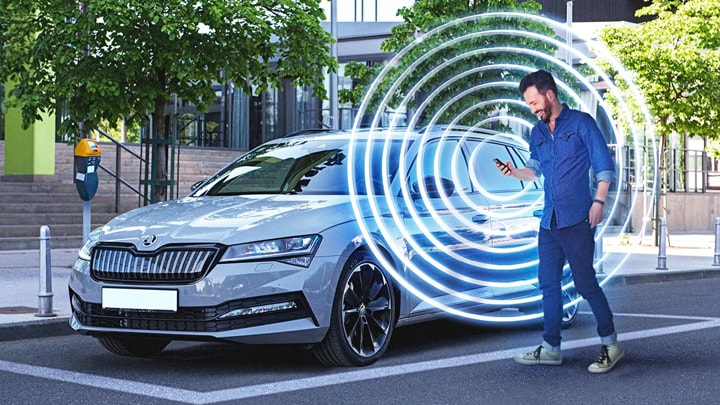
Seat/mirror/steering wheel adjustments[2][6]- Infotainment preferences (radio presets, EQ settings)[2]- Climate control configurations[18] Raising the Bar in Security and Performance for Automotive Bluetooth® Low EnergyNXP enables automotive Bluetooth Low Energy solutions such as smart access handsfree unlock and key sharing with the KW45.
NXP Semiconductors
 4. Diagnostic & Maintenance Systems
BLE facilitates:
4. Diagnostic & Maintenance Systems
BLE facilitates: -
Wireless OBD-II dongles for telematics[6]- Tire pressure monitoring (TPMS)[6][14]- Predictive maintenance alerts[2]
5. Cable Replacement BLE eliminates physical wiring for:
- Power seat/window/mirror controls[2]- Trunk release mechanisms[6]- Sunroof actuators[2]
NHTSA Cybersecurity Guidelines: Ensuring Vehicle Safety in the Digital AgeIntroduction As modern vehicles continue to adopt connected, autonomous, shared, and electric (C.A.S.E) technologies, cybersecurity has emerged as a top priority in the automotive world. The U.S. National Highway Traffic Safety Administration (NHTSA)—responsible for regulating motor vehicle and highway safety—has emphasized the need for
 Compliance Hub WikiCompliance Hub

BLE Security Vulnerabilities
Recent research reveals three primary attack vectors:
Vulnerability Type Impact Example CVEs
Device Tracking Location privacy breach CVE-2020-12856[4]
Eavesdropping Data interception CVE-2019-19196[5]
MITM Attacks Session hijacking CVE-2020-15802[7]
bluefuzzingbluefuzzing.pdf5 MB.a{fill:none;stroke:currentColor;stroke-linecap:round;stroke-linejoin:round;stroke-width:1.5px;}download-circle
GitHub - quarkslab/ble-gatt-fuzzing: Tool developed to fuzz the GATT layer of the Bluetooth Low Energy protocol based on defined attack scenarios.Tool developed to fuzz the GATT layer of the Bluetooth Low Energy protocol based on defined attack scenarios. - quarkslab/ble-gatt-fuzzing GitHubquarkslab
- SweynTooth vulnerabilities affecting NXP/TI chipsets (CVE-2019-17519, CVE-2019-19192)[5][7]- Key Negotiation flaws in pairing processes[4][9]- GATT layer spoofing through malformed attributes[8]
Open vs. Closed Source in Agriculture Equipment: The Software Debate, Licensing Fees, GPS, and the Right to Repair1. Introduction The modern farming landscape is more than just fields and tractors—it’s a sophisticated ecosystem of sensors, satellite connectivity, and advanced machinery. As agricultural equipment becomes increasingly digitized, the software driving these machines has become a focal point for discussions around ownership, access, and innovation. At the
 Compliance Hub WikiCompliance Hub

Fuzzing Methodology for BLE Systems
The WHAD framework provides a structured approach for BLE fuzzing:
1. Protocol Analysis
- Map GATT service hierarchy[8][22]- Identify ATT operations (read/write/notify)[34]- Document SMP pairing procedures[5]
2. Fuzzer Configuration
from whad import BleScanner
from whad.protocol.ble import BleConnection

scanner = BleScanner()
scanner.start()
device = scanner.discover('VEHICLE_BLE_MAC')
conn = BleConnection(device)
conn.connect()
3. Attack Vectors
- Stateful Fuzzing: Maintain connection context across tests[25]- PDU Mutation: Manipulate header fields and payloads[8]- Timing Attacks: Exploit connection interval widening[5]
4. Anomaly Detection Monitor for:
- Unexpected disconnects- Memory leakage patterns- Invalid response codes (0x01-0xFF)[34]
Understanding the Evolving Landscape of Agricultural Machinery StandardsBelow is a comprehensive, in-depth article discussing ISO 24882, ISO 11783, and ISO 25119—three key standards shaping modern agricultural machinery. Feel free to tailor this write-up to your preferred length or style. Technical Documentation: Cybersecurity and IoT in the Trucking Industry1. Introduction Connected commercial trucks today rely on a
 Compliance Hub WikiCompliance Hub

Case Study: SweynTooth Findings
Texas Instruments CC2640 implementations exhibited:
- Invalid LL Control Parsing leading to deadlocks[5]- Key Size Overflow in SMP layer (CVE-2019-19196)[5]- LLID Field Manipulation causing buffer overflows[23]
Mitigation Strategies
- Secure Pairing: Enforce LE Secure Connections (LESC)[9]2. Input Validation: Sanitize ATT MTU sizes[8]3. Firmware Updates: Implement secure OTA mechanisms[6]4. Protocol Hardening: Use BLE 5.1+ with angle-of-arrival security[37]
Automotive manufacturers like NXP and TI now offer AEC-Q100 certified BLE SoCs with hardware-based cryptographic accelerators and secure boot capabilities[6][20]. Regular penetration testing using frameworks like WHAD and BTFuzzer[21] has become essential in vehicle development cycles.
The combination of BLE’s low-power advantages and automotive connectivity demands creates both opportunities and security challenges. As demonstrated by recent research, systematic fuzzing approaches combined with protocol-aware analysis remain the most effective way to identify vulnerabilities in complex BLE implementations[8][23].
Technical Documentation: Cybersecurity and IoT in the Trucking Industry1. Introduction Connected commercial trucks today rely on a variety of sensors and electronic control units (ECUs) to improve safety, efficiency, and driver comfort. As vehicles incorporate more Internet of Things (IoT) technologies—such as LiDAR, radar, cameras, and advanced telematics—cybersecurity becomes critical.
This document provides guidance on secure Compliance Hub WikiCompliance Hub
 https://hardwear.io/netherlands-2024/presentation/ble-gatt-fuzzing-bboyer.pdf
https://www.ti.com/lit/wp/sway008/sway008.pdf
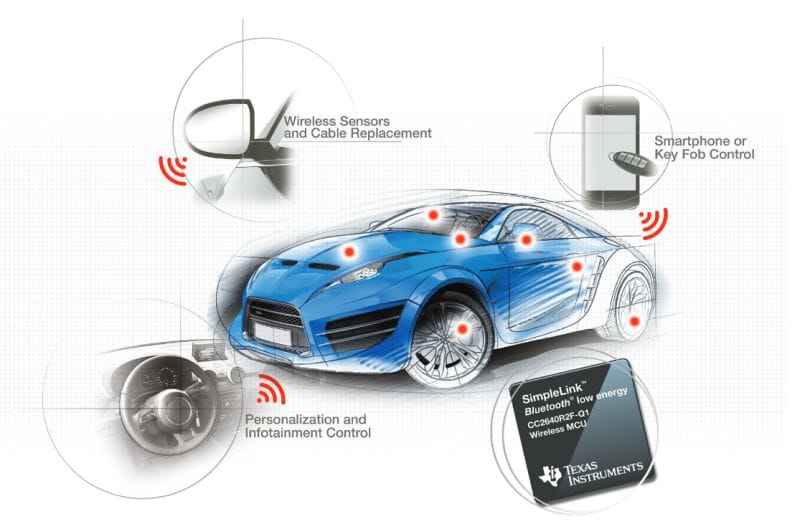
Key BLE Integration Points
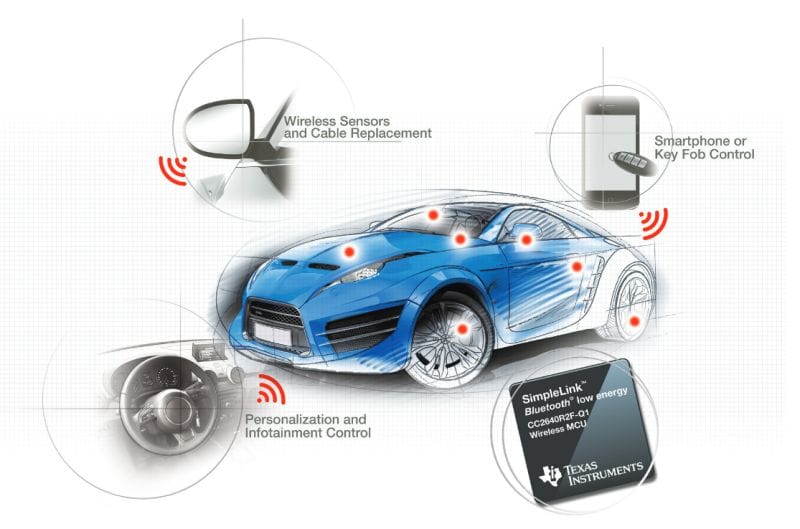
Wireless Sensors and Cable ReplacementThe upper left bubble shows how BLE eliminates traditional wiring by enabling wireless communication for various vehicle sensors, reducing weight and complexity in the vehicle’s electrical system.Smartphone/Key Fob IntegrationThe upper right bubble demonstrates the smart access capabilities, where BLE enables:
- Digital key functionality through smartphones- Traditional key fob communication- Secure vehicle access control
Interior SystemsThe lower left bubble highlights the personalization and infotainment control features:
- Driver preference settings- Entertainment system controls- Climate control adjustments
Hardware ImplementationThe lower right corner shows a Texas Instruments SimpleLink™ BLE chip, which is specifically designed for automotive applications with:
- Low energy consumption- Wireless MCU capabilities- Automotive-grade specifications
Technical Implementation
The red dots scattered across the vehicle’s body indicate various BLE connection points, demonstrating the comprehensive coverage of wireless connectivity throughout the vehicle’s systems. This distributed network of BLE sensors and controllers creates a sophisticated ecosystem for vehicle monitoring, control, and user interaction.The technical illustration effectively shows how BLE technology serves as a cornerstone for modern automotive connectivity, enabling both convenience features and essential vehicle functions while maintaining energy efficiency.
Citations: [1] https://www.techtarget.com/iotagenda/definition/Bluetooth-Low-Energy-Bluetooth-LE [2] https://www.ti.com/lit/wp/sway008/sway008.pdf?ts=1703416462553 [3] https://www.minewtag.com/5-features-of-bluetooth-low-energy.html [4] https://www.allaboutcircuits.com/technical-articles/vulnerabilities-and-attacks-on-bluetooth-le-devicesreviewing-recent-info/ [5] https://asset-group.github.io/papers/SweynTooth.pdf [6] https://www.edn.com/secure-bluetooth-le-adoption-on-rise-in-automotive-applications/ [7] https://www.thyrasec.com/blog/top-6-bluetooth-vulnerabilities/ [8] https://blog.quarkslab.com/bluetooth-low-energy-gatt-fuzzing.html [9] https://www.einfochips.com/blog/bluetooth-low-energy-ble-security-and-privacy-for-iot/ [10] https://www.bluetooth.com/bluetooth-resources/bluetooth-low-energy-and-the-automotive-transformation/ [11] https://response.nordicsemi.com/the-complete-guide-to-bluetooth-low-energy [12] https://www.bluetooth.com/bluetooth-resources/exploring-connectivity-trends-car/ [13] https://litum.com/what-is-ble-how-does-ble-work/ [14] https://semiengineering.com/the-proliferation-of-bluetooth-in-v2x-automotive-applications/ [15] https://www.silabs.com/documents/public/user-guides/ug103-14-fundamentals-ble.pdf [16] https://www.youtube.com/watch?v=aXRSmuHdaZ8 [17] https://developer.android.com/develop/connectivity/bluetooth/ble/ble-overview [18] https://www.renesas.com/en/blogs/ask-experts-how-bluetooth-low-energy-enabling-keyless-future-drivers [19] https://learn.adafruit.com/introduction-to-bluetooth-low-energy/introduction [20] https://www.nxp.com/company/about-nxp/smarter-world-blog/BL-AUTOMOTIVE-BLE [21] https://yonghwi-kwon.github.io/data/btfuzzer_icisc23.pdf [22] https://blog.quarkslab.com/tag/ble.html [23] https://www.usenix.org/system/files/sec22-garbelini.pdf [24] https://bluegoatcyber.com/blog/top-ble-cybersecurity-vulnerabilities/ [25] https://git.ist.tugraz.at/apferscher/ble-fuzzing [26] https://github.com/Charmve/BLE-Security-Attack-Defence [27] https://www.bluetooth.com/learn-about-bluetooth/key-attributes/bluetooth-security/reporting-security/ [28] https://stackoverflow.com/questions/54584087/bluetooth-low-energy-fuzzing [29] https://cybervelia.com/ble-pentest [30] https://ieeexplore.ieee.org/document/7804832/ [31] https://gigvvy.com/journals/cccisa/articles/security-fuzz-testing [32] https://hardwear.io/netherlands-2024/speakers/baptiste-boyer.php [33] https://cve.mitre.org/cgi-bin/cvekey.cgi [34] https://hardwear.io/netherlands-2024/presentation/ble-gatt-fuzzing-bboyer.pdf [35] https://www.link-labs.com/blog/bluetooth-vs-bluetooth-low-energy [36] https://www.linkedin.com/pulse/bluetooth-low-energy-ble-power-efficient-connectivity-solution-kmvfc [37] https://www.bluetooth.com/learn-about-bluetooth/tech-overview/ [38] https://novelbits.io/bluetooth-low-energy-ble-complete-guide/ [39] https://www.usenix.org/system/files/sec22_slides-garbelini.pdf